
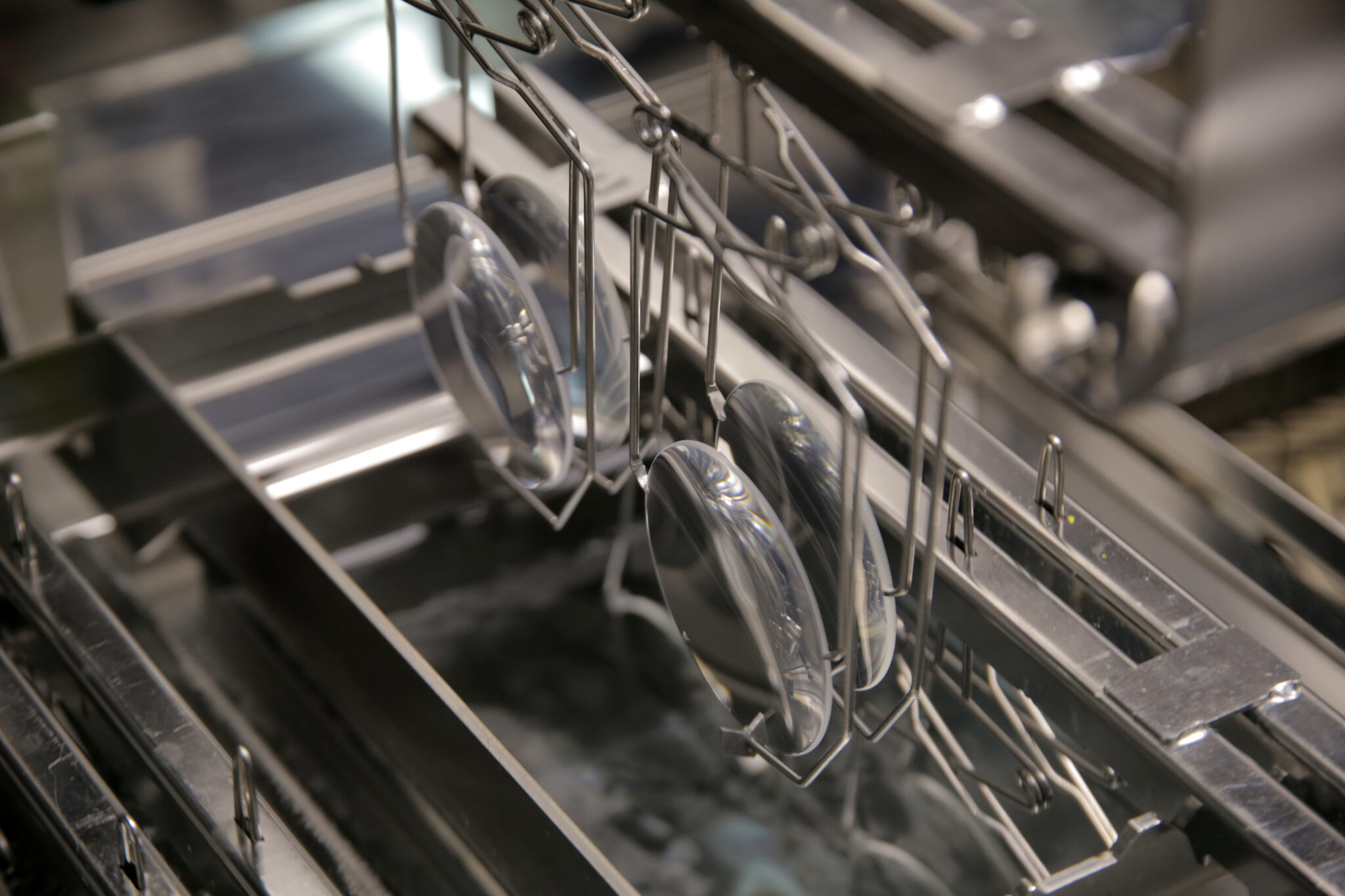

The Hard Coating process is performed in order to improve impact and abrasion resistance of the ophtalmic lenses. This is achieved by applying a thin layer on the surface of the lenses (or sometimes on top of an adhesion‑improving underlayer, called primer, especially used for polycarbonate lenses).
The Etching Process using hydroxides
One of the critical points of this process is the adhesion of the Hard Coat (still in its liquid state) during immersion. This adhesion is made possible through a washing and surface‑activation step, known as etching.
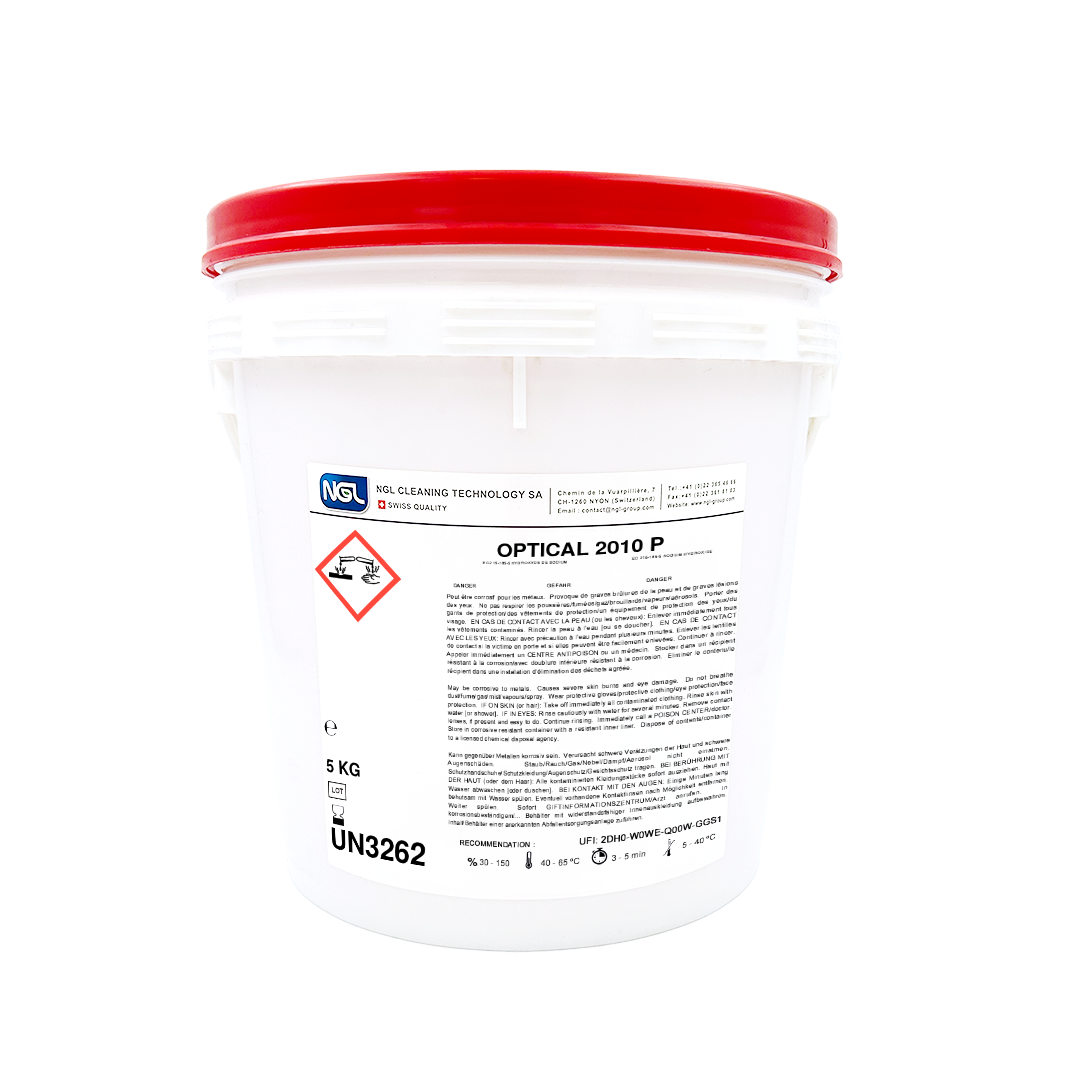
OPTICAL 2010, the NGL product dedicated to this application
Powdered detergent, strongly alkaline, highly concentrated with sodium hydroxide for surface activation of organic glasses and removal of HC/AR coatings, in ultrasonic processes.

NGL process for surface activation of ophthalmic lenses
Optimised adhesion with chemically activated surfaces by OPTICAL 2010 (powder). Neutralize before Hard Coating with OPTICAL 10L or OPTICAL 30.

Key questions and points
What substrates are compatible?
- Organic lenses
- Polycarbonates
How does OPTICAL 2010 offer improved rinsability?
OPTICAL 2010 in solution shows a surface tension significantly lower than sodium hydroxide, and also much lower than most of the formulations available on the market for achieving an “etching” effect.
Can we expect an improvement in the performance of Hard Coating?
A significant improvement in hard‑coating yield has been observed, particularly on high‑index lenses, which are known to be considerably more difficult to coat.